Speech Pathology via Telehealth: Practical Care That Fits Your World
What telehealth speech pathology actually involves, when in-person is still the better fit, and how to decide which works for you.
If therapy has ever felt like a logistical juggle, you're not imagining it. The travel, the time off school or work, the waitlists, the parking. For a lot of families, those barriers are the main reason therapy gets postponed. Telehealth flips that. Your clinician meets you where life actually happens, at home, at school, at work, so strategies get tested in the exact places you'll use them. It's fully supported under the NDIS, permanently covered by Medicare, and backed by Australia's Digital Health Blueprint. This isn't a pandemic leftover. It's how allied health is being delivered now.
You don't need to choose one or the other. CARED offers telehealth, hybrid, and in-person models. Your clinician will help you work out which fits, and you can switch as your needs change.
Why traditional therapy doesn't always work
Clinic-based therapy can be great, but it doesn't always fit real life. Around 27% of Australians live outside major cities, where access gaps hit hardest. NDIS travel caps are pushing providers out of regional areas, and waitlists can stretch anywhere from 6 to 24 months. Even in metro areas, families deal with rigid appointment windows, travel costs, and the reality that a 45-minute session can eat up half a day once you factor in the commute.
A national survey of 2,391 NDIS participants, carers, and families found that 63% moved their allied health supports to video or phone during COVID. Nearly a third said they'd choose telehealth going forward, roughly 130,000 participants. The demand didn't disappear when lockdowns ended.

"Every hour spent on the road is an hour lost from therapy."
For families in regional and remote Australia, distance is one of the biggest barriers to consistent therapy. Every hour on the road is an hour that could have gone to support.
What telehealth speech pathology actually looks like
Speech pathology helps build communication, language, speech clarity, social interaction, literacy, and swallowing skills. But what does a telehealth session actually involve? Here's what it looks like across five common scenarios.
Functional Communication Assessment
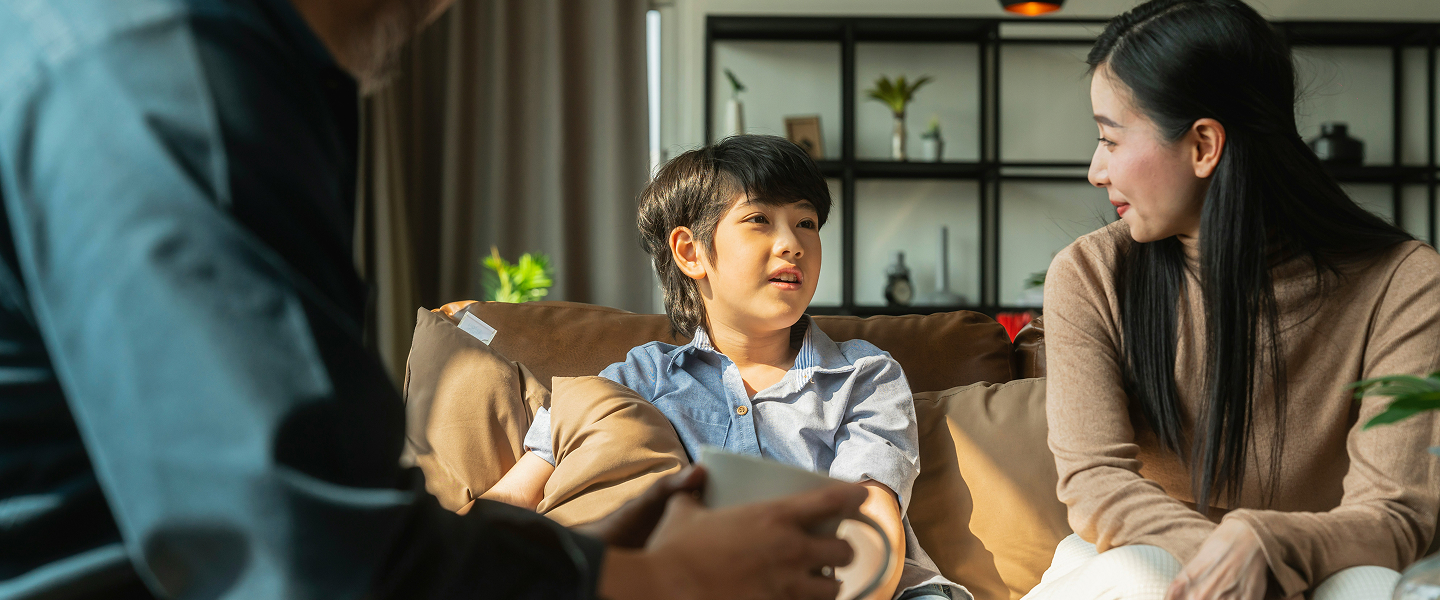
Does your child struggle to follow instructions or get stuck finding words? In a telehealth session, your clinician observes real routines like homework or mealtime and assesses expressive and receptive language, speech sounds, and social communication. Then they coach you on strategies that slot into your day-to-day life, not just exercises that work in a clinic room.
AAC Assessment (Augmentative and Alternative Communication)
When speaking isn't the easiest way to communicate, there are other options. Your clinician will explore tools like picture boards or speech-generating devices and teach you how to use them during real activities: ordering food, joining class discussions, or chatting with friends.
Swallowing and Dysphagia Assessment
Do meals feel stressful or unsafe? Coughing on drinks, fatigue during eating, or frequent chest infections can all point to swallowing difficulties. Your clinician will review the mealtime setup via video, guide safe swallowing strategies, and involve carers at every step. If instrumental assessment is needed, they'll arrange in-person follow-up.
Literacy and Phonological Awareness Assessment
If reading is a daily battle, your clinician will run tailored tasks online to check sound awareness and decoding skills, then give you practical home activities, like word games, to build confidence and progress between sessions.
Pragmatic Language Assessment
Does conversation stall or feel awkward for your child? Telehealth sessions use role-play and real-life prompts to practise turn-taking, topic flexibility, and reading social cues, helping your child feel more confident with peers.
Credentialing matters. For NDIS speech therapy supports, clinicians must hold CPSP status (Certified Practising Speech Pathologist). CARED only engages appropriately credentialed clinicians.
Real stories of telehealth speech pathology in action
These aren't hypotheticals. Here's what telehealth speech pathology looks like when it's actually running.
"Come N See": Rural school telehealth in NSW
For kids in remote New South Wales, speech therapy used to mean long waits and missed opportunities. The Come N See program changed that. Instead of waiting months for a visiting clinician, students now join six short telehealth sessions from their classroom, with a teaching assistant actively involved. The program was designed for low-bandwidth connections, making it practical for rural schools. Each session lasted 30 minutes, and therapists followed up with emailed resources so strategies could be reinforced between calls.
Access improved dramatically. Anxiety gave way to confidence as communication skills grew. Teachers described the program as feasible and effective for rural settings.
"Kids reported feeling happy and proud when they could join in classroom conversations."

Meals made safer: Telehealth dysphagia support in QLD
For adults in smaller Queensland facilities, waiting for a swallowing assessment used to mean days of risk and discomfort. Using a hub-and-spoke model, speech pathologists assessed swallowing safety via secure video, with carers present to assist. They reviewed posture, food textures, and routines, then coached staff on safe strategies.
Wait times dropped by two days. Average cost savings hit $218 per session compared to standard care. 64% of patients had immediate changes to diet or fluid consistency for safety. Both patients and clinicians reported high satisfaction with minimal tech issues.
Coaching, capacity building, and why environment matters
One of the less obvious advantages of telehealth is that it supports family-centred, strengths-based practice by embedding therapy in the places where life actually happens. Instead of clinic-only routines, strategies get coached into everyday activities: playgroups, story time at the local library, mealtime at home, homework at the dining table.
When a clinician can see your actual environment, they tailor recommendations to what's already happening rather than designing exercises that only work in a treatment room. Carers, teachers, and support workers can join sessions easily, which builds capacity across the participant's whole support network. Research consistently shows that carry-over between sessions is stronger when strategies are practised where they'll actually be used.
A quick self-check before choosing telehealth
Before you start, it helps to run through a few practical questions.
Technology and environment. Do you have a reliable device, internet connection, and a private space for sessions? Is there a backup plan if tech fails, like a phone call or reschedule?
Clinical suitability. Are the participant's needs safe and effective to address via telehealth? (Your clinician will help you assess this.)
Goals and outcomes. Are therapy goals achievable through telehealth and everyday routines?
Consent and comfort. Has the participant or family provided informed consent? Is everyone comfortable using video or phone and ready to give it a go?
Support availability. Is a carer or support person available if needed for positioning, tech setup, or implementing strategies?
Privacy and confidentiality. Is the space private enough to maintain confidentiality and meet NDIS and AHPRA standards?
Flexibility. Would a hybrid model, combining telehealth with community or in-person visits, better meet your needs?
If any answer is "not yet," that's fine. We'll help you solve it, or recommend an in-person pathway. Safety and outcomes come first.
How to start with CARED
Getting started is straightforward. Enquire or refer through our website or by phone. Share your goals, whether that's communication, mealtimes, routines, equipment, or something else. Provide your plan or referral details. We'll match you with an AHPRA-registered clinician based on your needs, and walk you through a plain-English service agreement with transparent fees and scheduling. From referral to first session, we aim for under a week.
If you're not sure whether telehealth is the right fit, that's what the first conversation is for. No pressure, no commitment.
Ready to start, or just have questions? Call 1300 367 117, email hello@cared.io, or submit a referral online. You can also book a free call to talk through suitability, tech needs, and your goals. No GP referral needed.
- Fairweather, G. C., Lincoln, M. A., & Ramsden, R. (2017). Speech-language pathology telehealth in rural and remote schools: the experience of school executive and therapy assistants. Rural and remote health, 17(3), 4225. https://doi.org/10.22605/RRH4225
- Thomas, E., Lee, C. M. Y., Norman, R., Wells, L., Shaw, T., Nesbitt, J., Frean, I., Baxby, L., Bennett, S., & Robinson, S. (2023). Patient Use, Experience, and Satisfaction With Telehealth in an Australian Population (Reimagining Health Care): Web-Based Survey Study. Journal of Medical Internet Research, 25, e45016. Article e45016. https://doi.org/10.2196/45016
- Burns, C. L., Ward, E. C., Gray, A., Baker, L., Cowie, B., Winter, N., Rusch, R., Saxon, R., Barnes, S., & Turvey, J. (2019). Implementation of speech pathology telepractice services for clinical swallowing assessment: An evaluation of service outcomes, costs and consumer satisfaction. Journal of telemedicine and telecare, 25(9), 545–551.
By Alex Hart
Service Navigation & Support
Start with a referral, not a waitlist
Tell us who you’re supporting, and we’ll begin matching them with the right practitioner, with the reasons in writing.